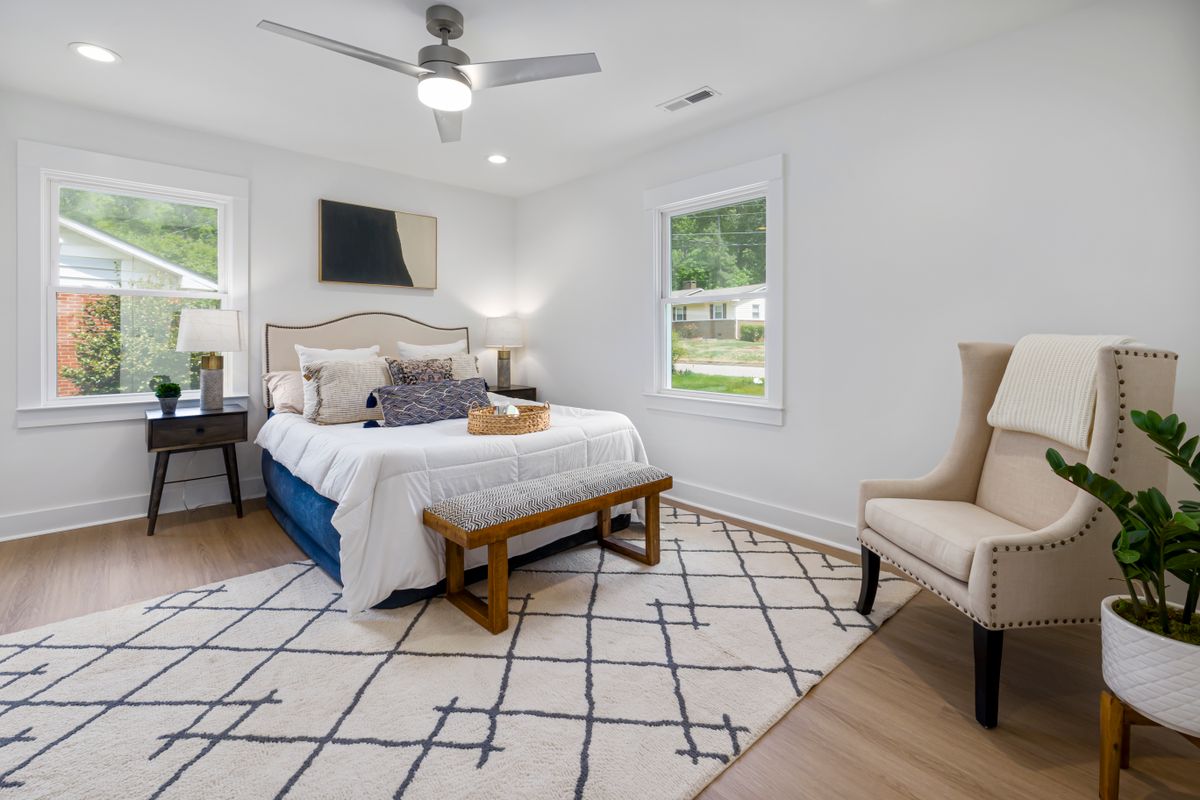
A small bedroom fills up fast. The bed takes most of the floor, the dresser blocks a wall, and before long there are clothes on the chair and shoes by the door. The good news is that most small rooms have more storage hiding in them than it seems: under the bed, above the door, behind the headboard and up the walls. These small bedroom storage ideas show six ways to use that space in a calm, coastal style, with what to buy, how to set it up and one mistake to avoid for each.
The short answer: go under (bed storage), go up (shelves and tall narrow furniture), and go behind (doors and headboards). Choose pieces that do two jobs, keep the colors light, and give every category of stuff one home so it doesn’t spread across the room.
1. A bed with drawers underneath
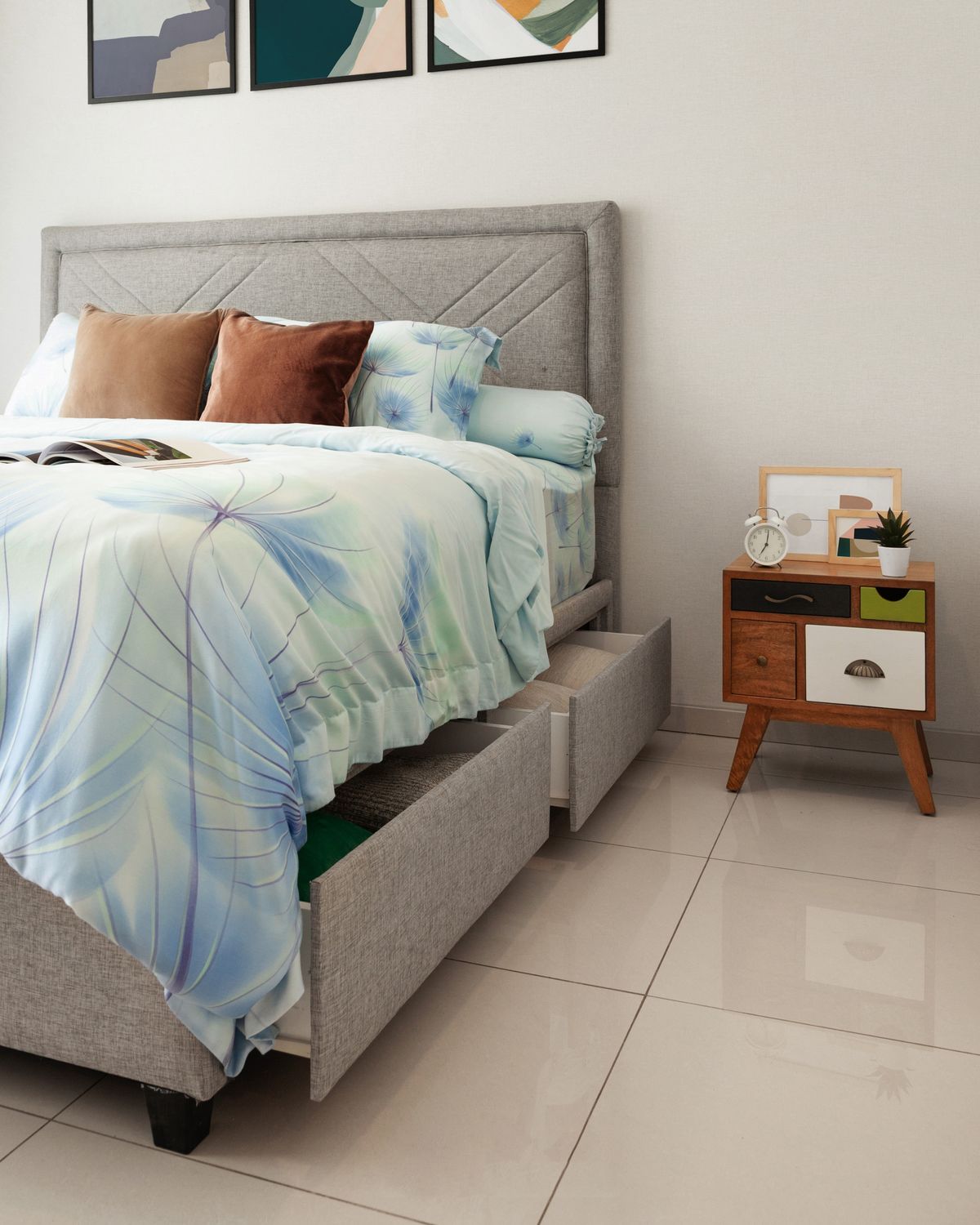
This photo shows an upholstered bed with a deep storage drawer built into the base, made up with soft blue and white bedding, and a small wooden nightstand beside it. Use the drawers for folded sweaters and spare bedding, and keep the floor around the bed clear. It works because the biggest piece of furniture in the room is now also the biggest storage piece.
What you need: a storage bed with drawers or a lift-up base, or, if you’re keeping your current bed, bed risers plus two or three low rolling bins with lids.
How to set it up: use the drawers for things you need weekly but not daily: off-season clothes, spare sheets, extra pillows. Fold items vertically, like files, so you can see everything at a glance when the drawer opens.
For example: in a 10 x 10 foot room, a queen bed with two drawers can hold a whole season of sweaters, which frees up the top two dresser drawers for everyday clothes.
Tip: measure the clearance beside the bed before buying. Drawers need about 20 inches of open floor to pull out fully; if your bed sits close to a wall, choose a lift-up base instead.
2. Floating shelves above the bed
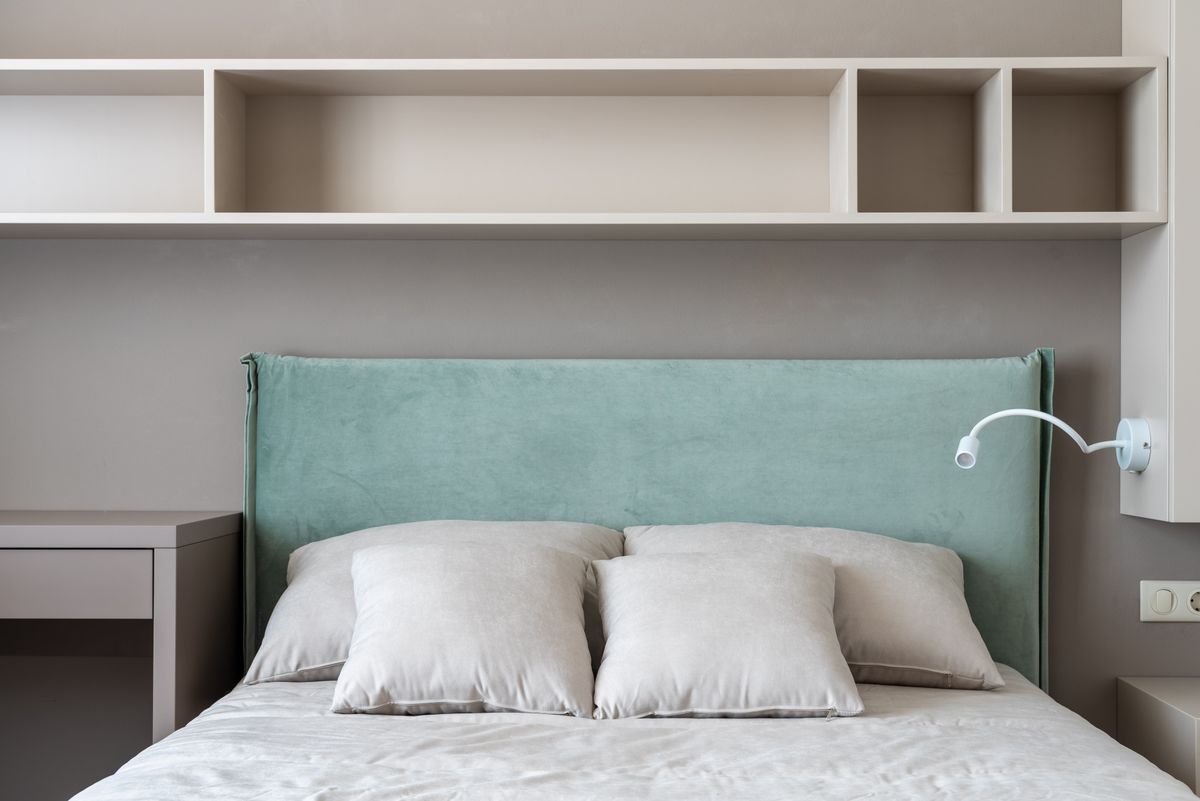
Here white open shelves run across the wall above a soft teal upholstered headboard, with a reading light mounted below them. Style shelves like these with a few books, a small plant and a woven basket, and leave plenty of empty space between objects. The shelves add storage where nothing else could go, and they act as a headboard feature at the same time.
What you need: one or two sturdy floating shelves (about 8 to 10 inches deep), wall anchors or studs to mount them into, and a few small baskets for loose items.
How to set it up: hang the lower shelf high enough that you won’t hit your head when sitting up in bed, usually at least 24 inches above the mattress top. Put heavier things near the brackets and lighter decor toward the middle.
Tip: keep the shelves less than two-thirds full. Over-stuffed shelves above the bed make a small room feel crowded and can feel unsettling to sleep under.
3. A tall, narrow dresser instead of a wide one
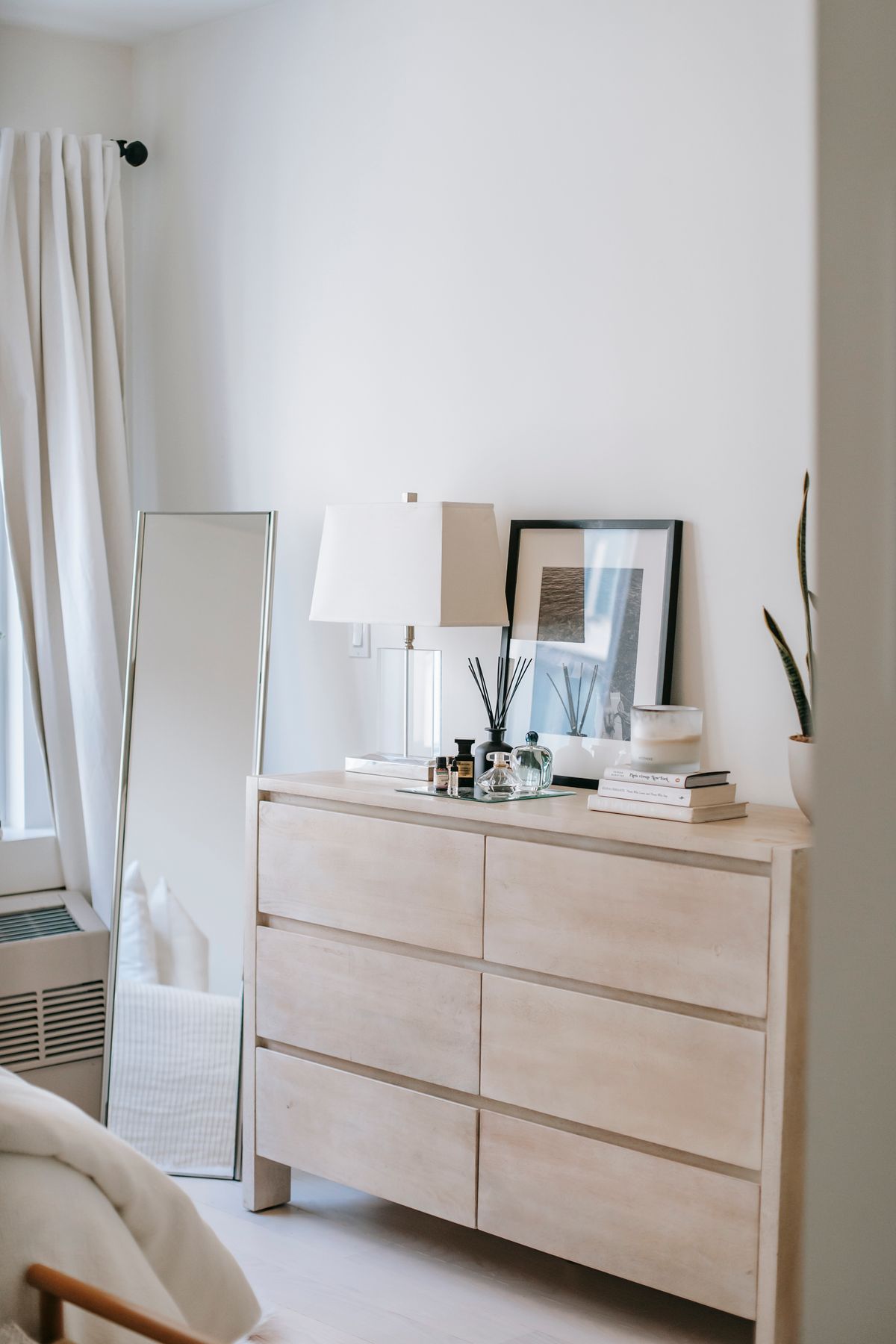
This picture shows a light wood chest of drawers against a white wall, with a lamp and a framed print on top and a tall mirror leaning beside it. In a small bedroom, choose a taller, narrower chest like this one over a wide, low dresser: it takes up less floor space but holds just as much, and a light color keeps it from feeling heavy.
What you need: a tall chest (sometimes sold as a “lingerie chest” or “semainier”) about 20 inches wide, plus a wall anchor kit so it can’t tip.
How to set it up: put everyday items in the middle drawers, which are easiest to reach. Use the top drawer for small things like socks and jewelry, and the bottom drawer for heavier items such as jeans.
For example: swapping a 60-inch dresser for a 20-inch tall chest frees about three feet of wall, enough for a small chair or a reading lamp.
Tip: always anchor tall furniture to the wall. Tip-overs are a real safety risk, especially in homes with children.
4. Over-the-door storage
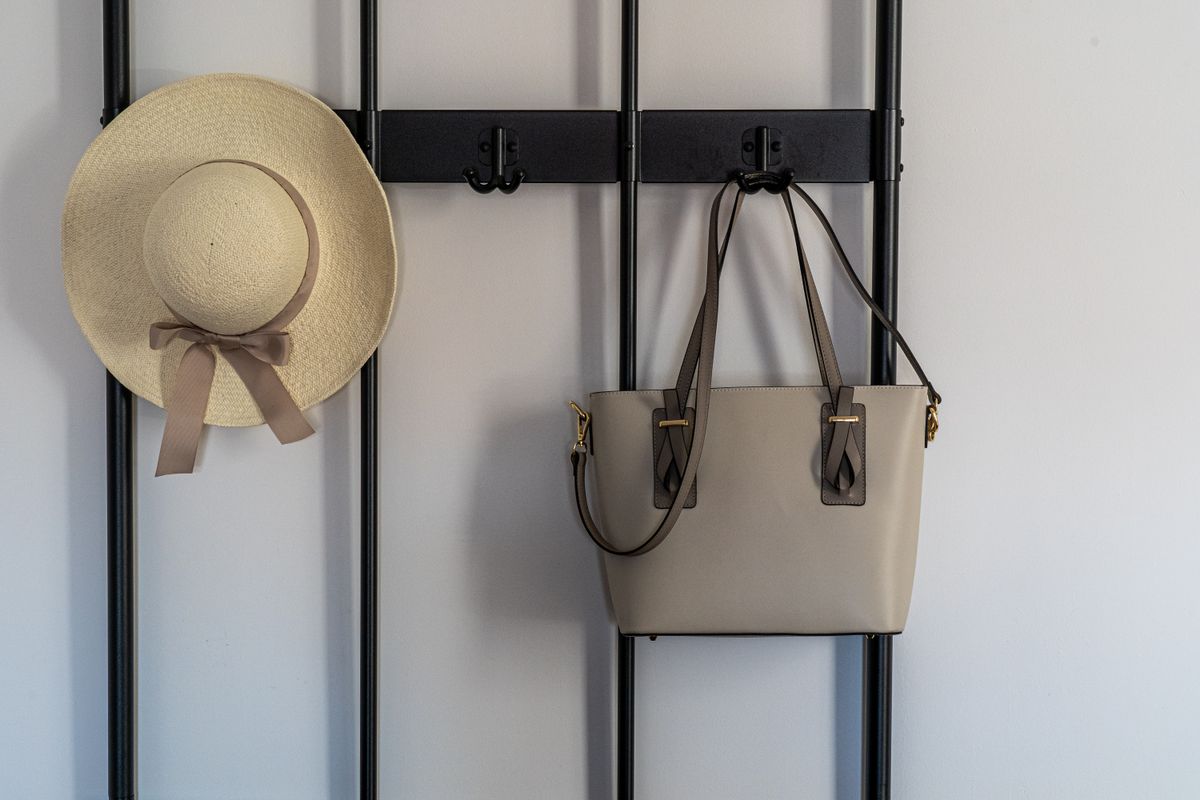
In this photo a slim black metal rack with hooks holds a straw hat and a shoulder bag. Hang a rack like this on the back of the bedroom door, or choose an over-the-door version with shallow baskets for scarves, belts, a hair dryer and folded tote bags, all hidden when the door is open against the wall. The back of a door is one of the most overlooked storage spots in any small bedroom.
What you need: an over-the-door organizer with adjustable baskets or pockets, or a few strong adhesive hooks if you only need to hang a robe and a bag.
How to set it up: check that the door still closes fully with the hooks in place, then put the most-used items at eye level. Group by category: one basket for accessories, one for hair tools, one for chargers and cables.
Tip: clear or open baskets work better than closed pockets, because you can see what’s inside without digging.
5. Nightstands that store, not just hold a lamp
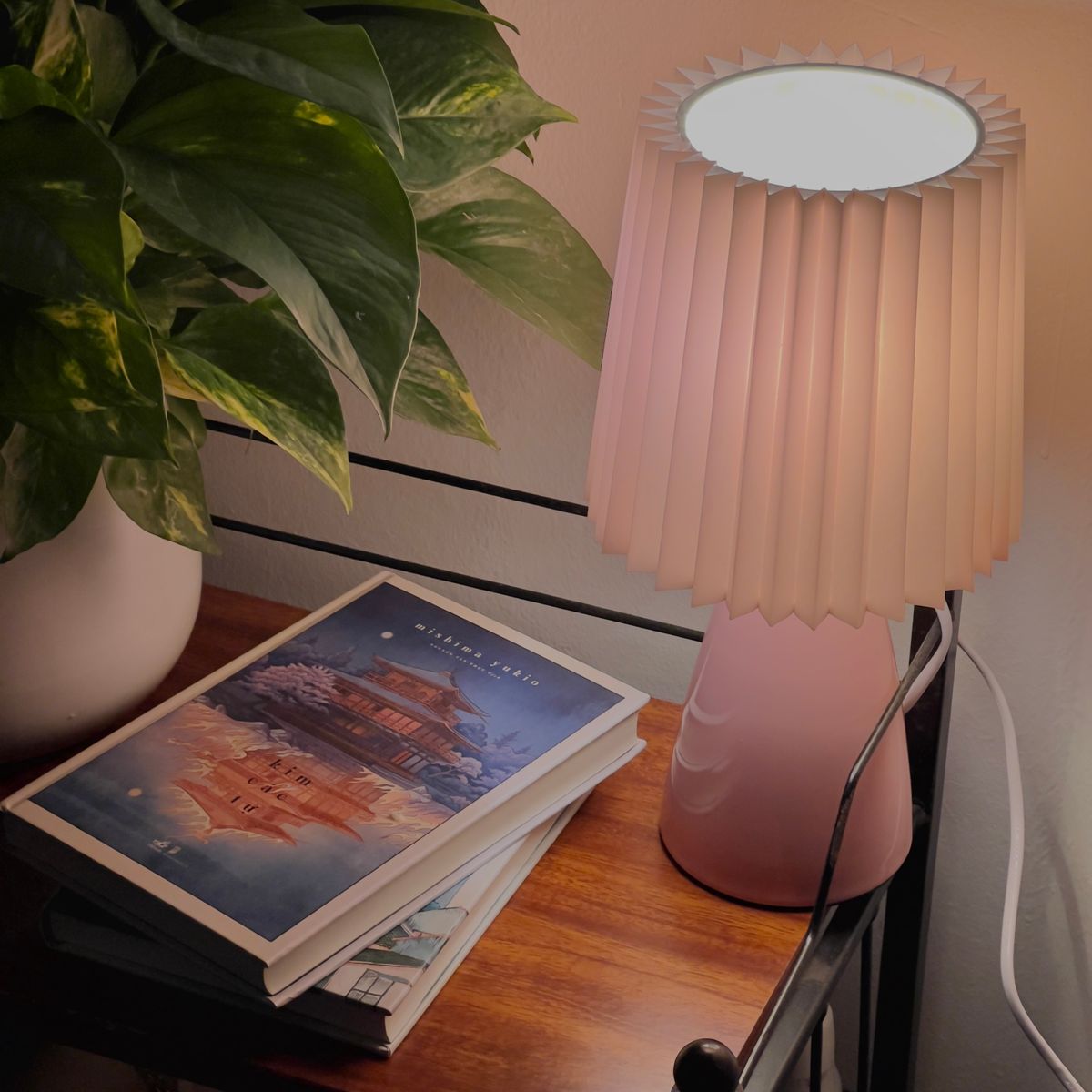
Here a bedside table holds a pink pleated lamp, a stack of books and a plant. Choose a nightstand with two drawers and a lower open shelf, so the top holds the lamp, the shelf holds a lidded woven basket and the books, and the drawers stay closed. Instead of a table with legs and empty space underneath, every inch is used.
What you need: a nightstand with at least one drawer and one shelf, or a slim two-drawer chest used as a bedside table. In a really tight room, a wall-mounted shelf with a single drawer works too.
How to set it up: top drawer for nightly things (lip balm, glasses, a book light), lower shelf for a basket of extra blankets or magazines.
Tip: check the height. A nightstand top that sits within a couple of inches of your mattress top is easiest to reach from bed.
6. Baskets and a bench at the foot of the bed
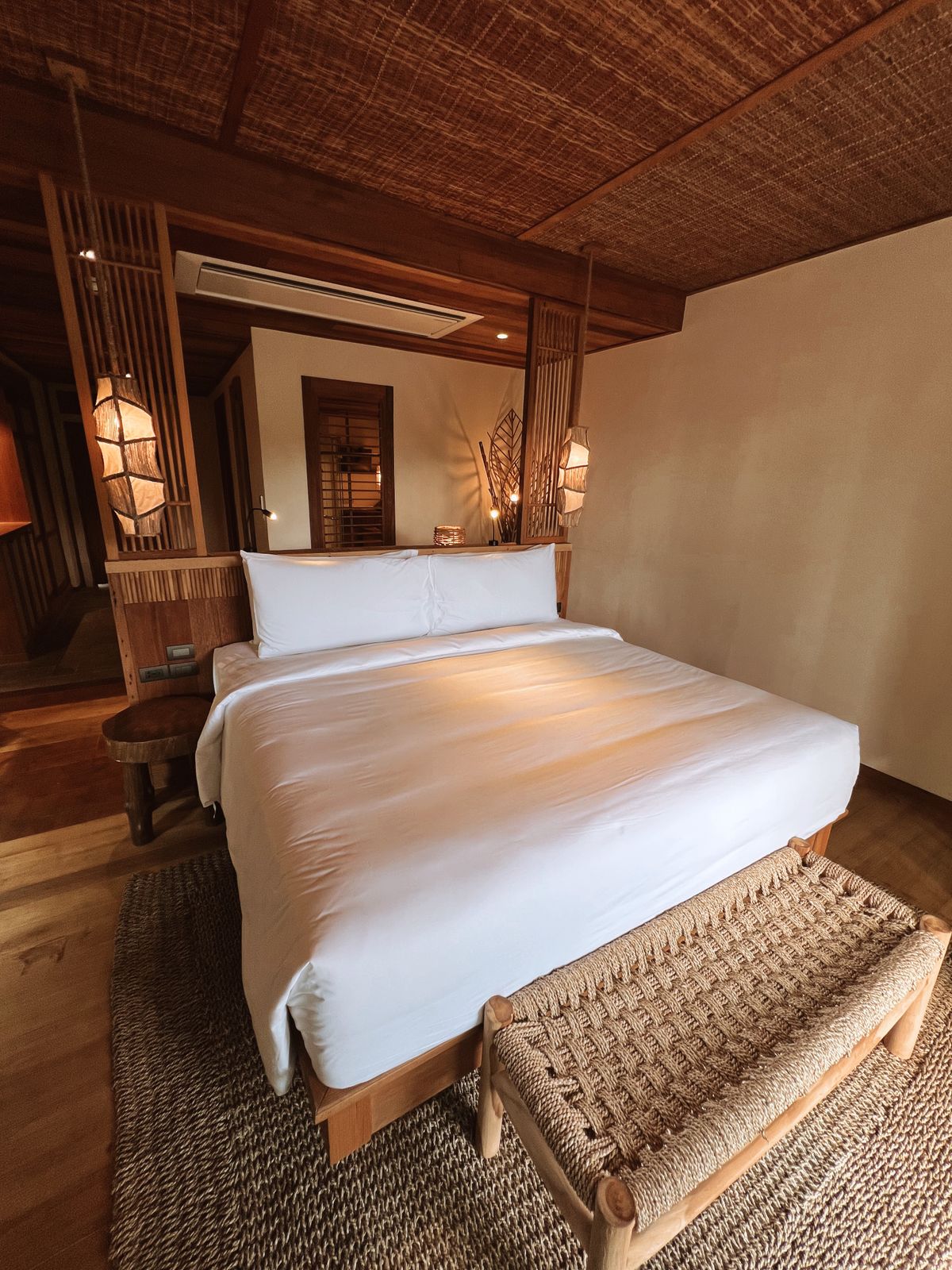
The last photo shows a low woven bench at the foot of a bed with white linens. Tuck two large woven baskets underneath: one for folded throws and the other for shoes. A soft cushion on the bench turns it into a place to sit while getting dressed. It’s storage that looks like decor, which suits a relaxed coastal bedroom.
What you need: a bench about as wide as your bed or a little narrower, and two or three baskets that fit underneath with a little room to spare.
How to set it up: leave at least two feet of walking space between the bench and the wall or dresser. Use one basket per category and add a simple handwritten tag if you share the room.
Tip: a storage ottoman or a lidded blanket chest does the same job and keeps dust off what’s inside.
Small bedroom storage: quick rules
- Use the space under the bed first; it’s the largest empty space in most bedrooms.
- Go vertical with shelves and tall, narrow furniture.
- Choose furniture that does two jobs (bed + drawers, bench + baskets).
- Keep colors light and shelves partly empty so the room still feels calm.
- Anchor anything tall to the wall.
You might also like
- 6 Small Living Room Ideas with TV
- 6 Small Entryway Ideas with Storage
- 21 Coastal Bedroom Ideas for a Calm, Beachy Retreat
For more detail, see the tips on reducing and reusing at home from the U.S. EPA.
Small Bedroom Storage Ideas: FAQ
How can I add storage to a small bedroom without a closet?
Use a storage bed or under-bed bins, a tall narrow chest, wall shelves and an over-the-door organizer. A freestanding clothes rail with a curtain in front can stand in for a closet.
Where should I put things I rarely use?
In lidded bins under the bed or on the top shelf of a wardrobe, so the easy-to-reach places stay free for daily items.
How do I make a small bedroom look less cluttered?
Give every category one home, keep surfaces mostly clear, choose light colors, and use matching baskets so stored items look tidy.
Start with the space under your bed this weekend, then add one shelf or one door organizer at a time. Small changes add up quickly in a small room.
Leave a Reply